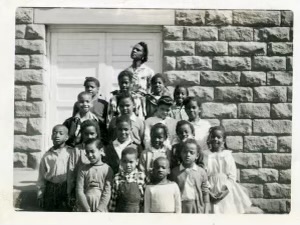
Perry A. Cline School
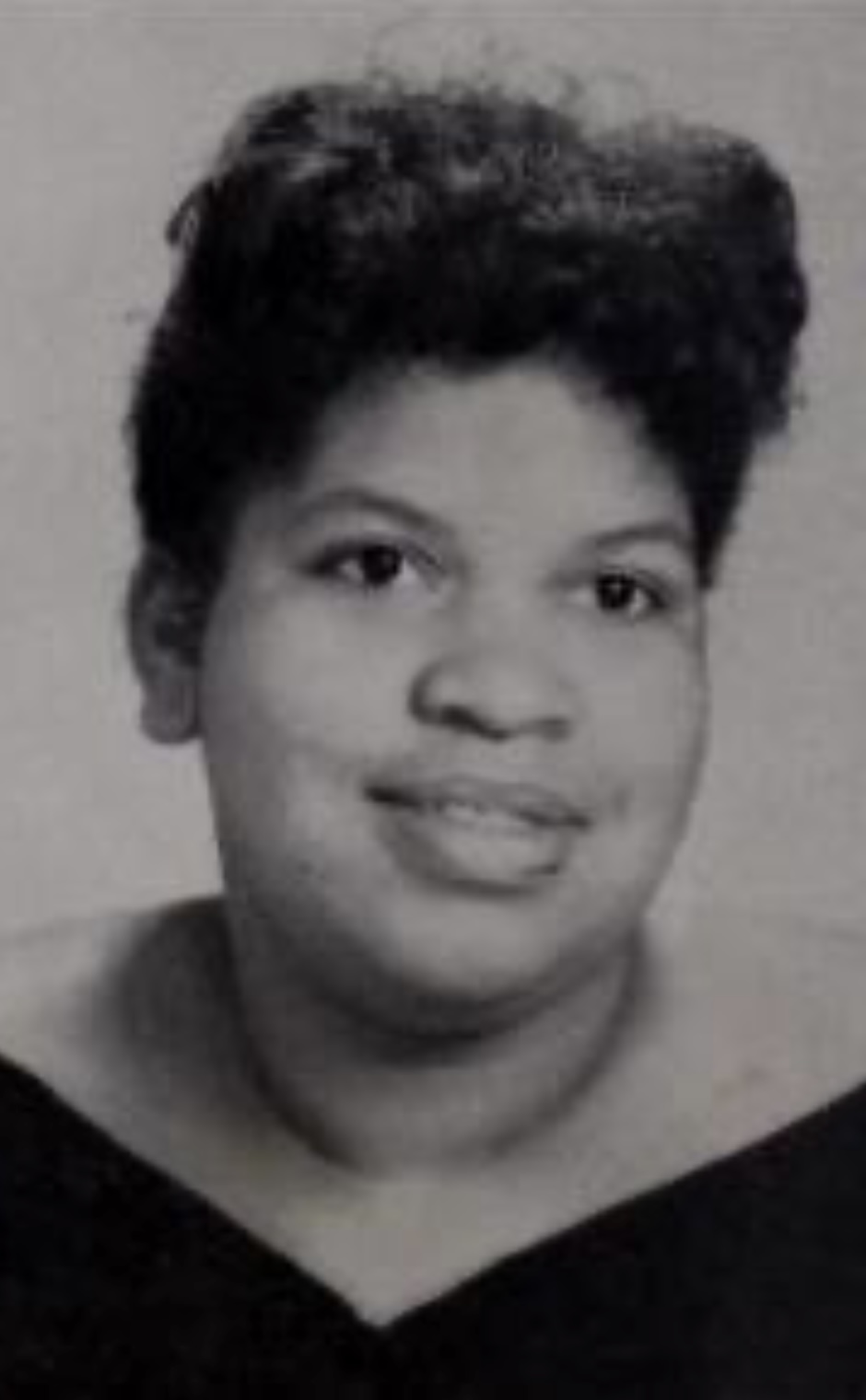
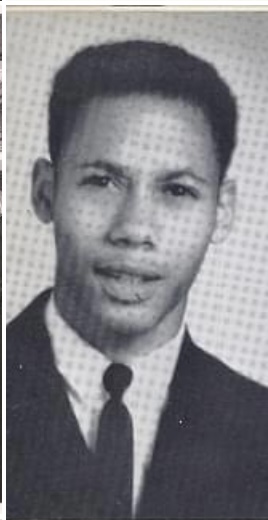
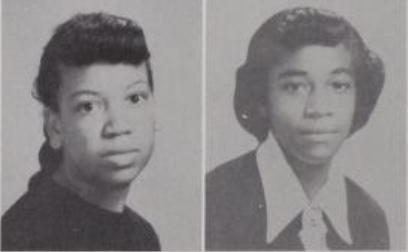
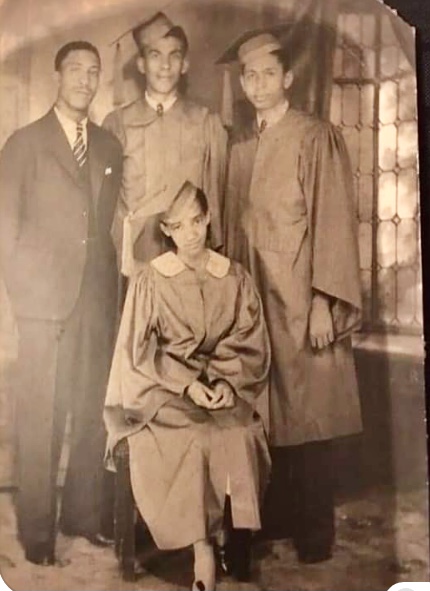
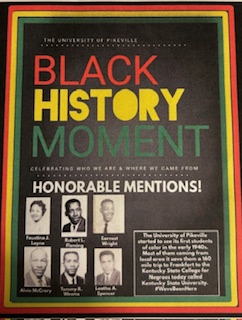
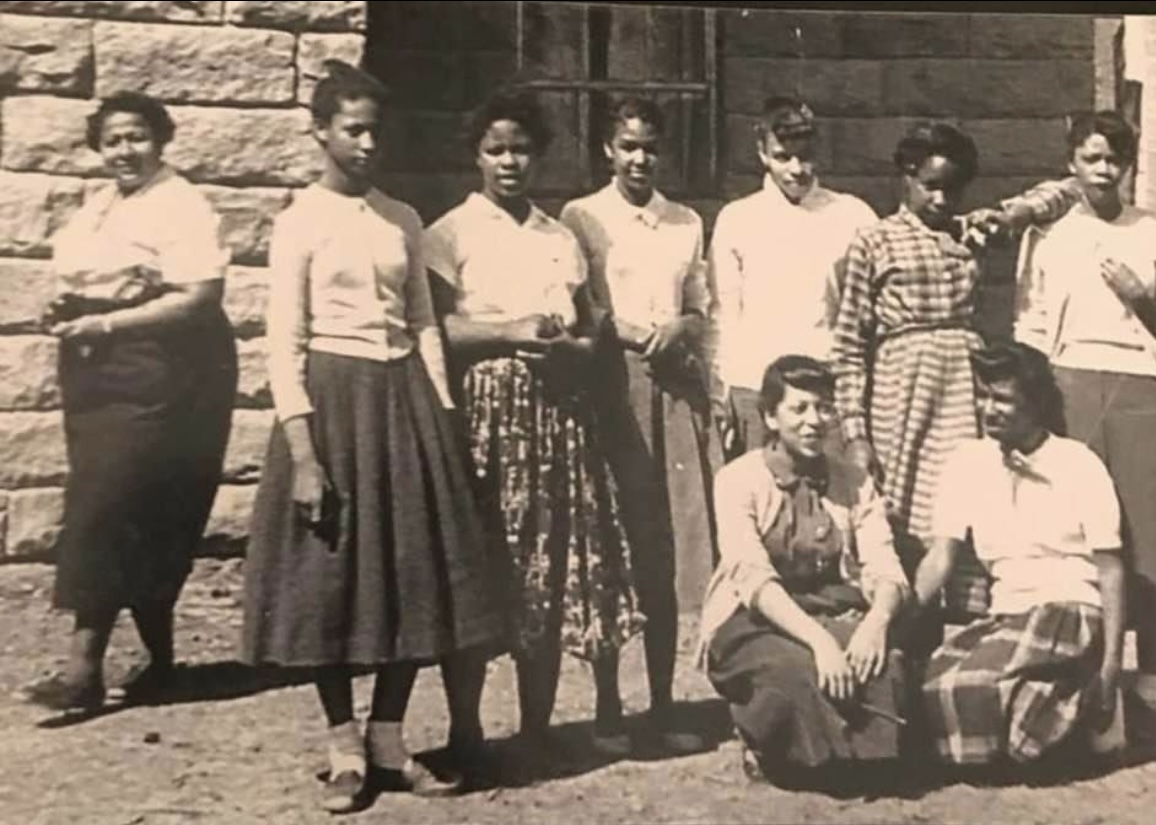
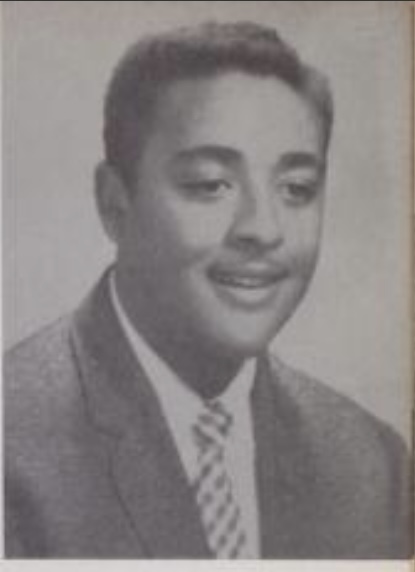
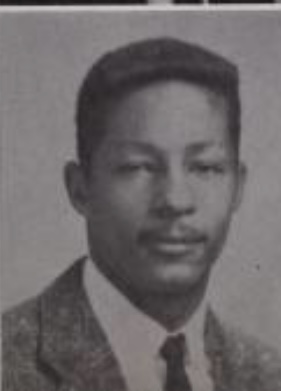
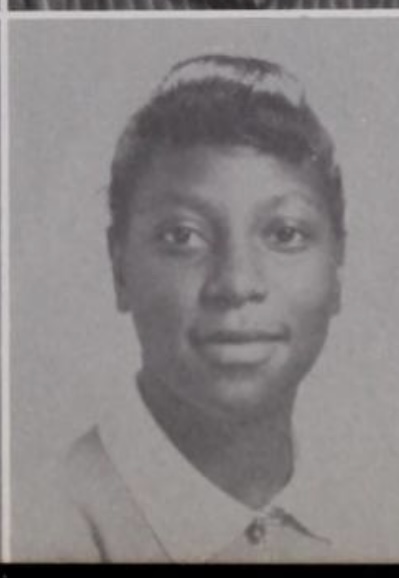
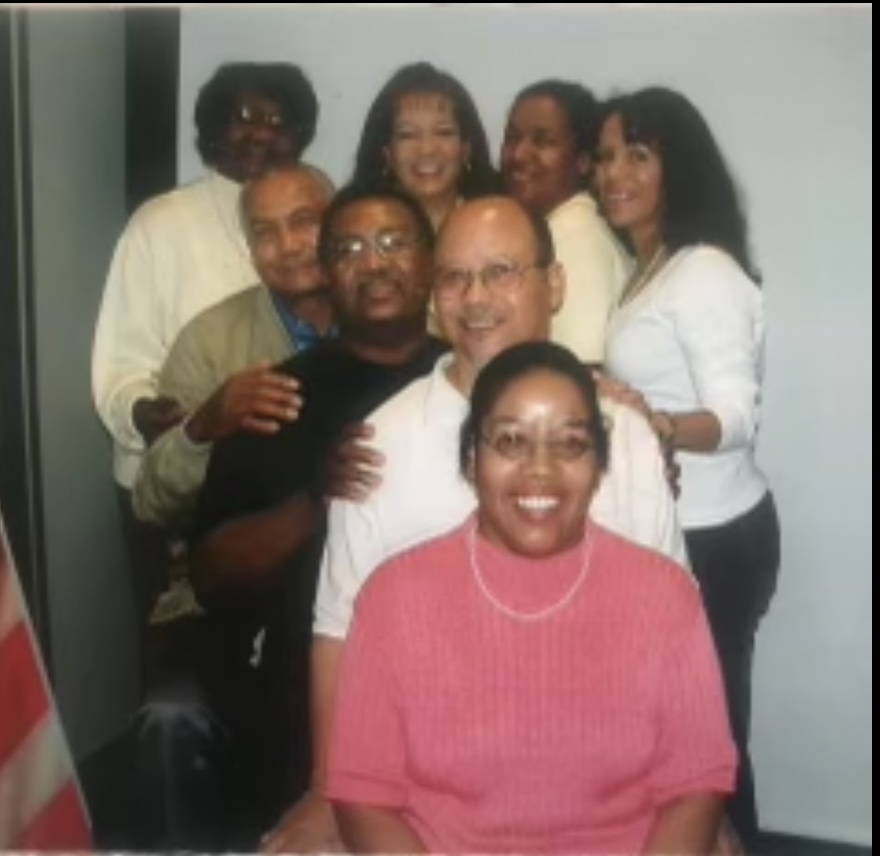
The last Perry A. Cline High School graduation May 1956. There were two graduates:
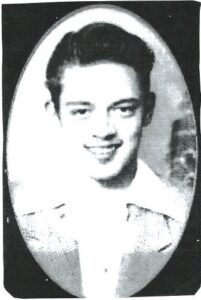
Lonnie B. Mullins
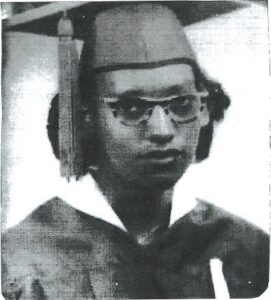
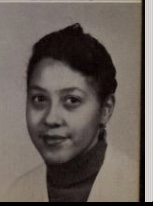
Alfredia Mullins
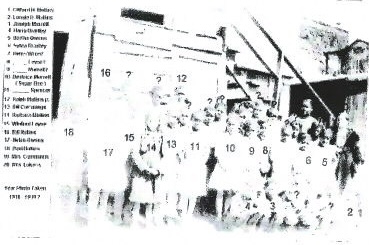

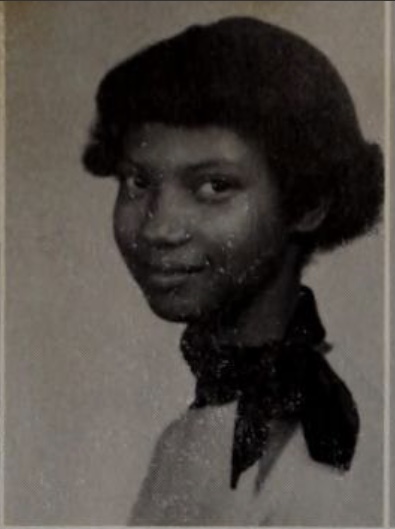
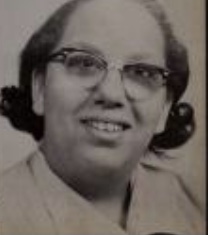
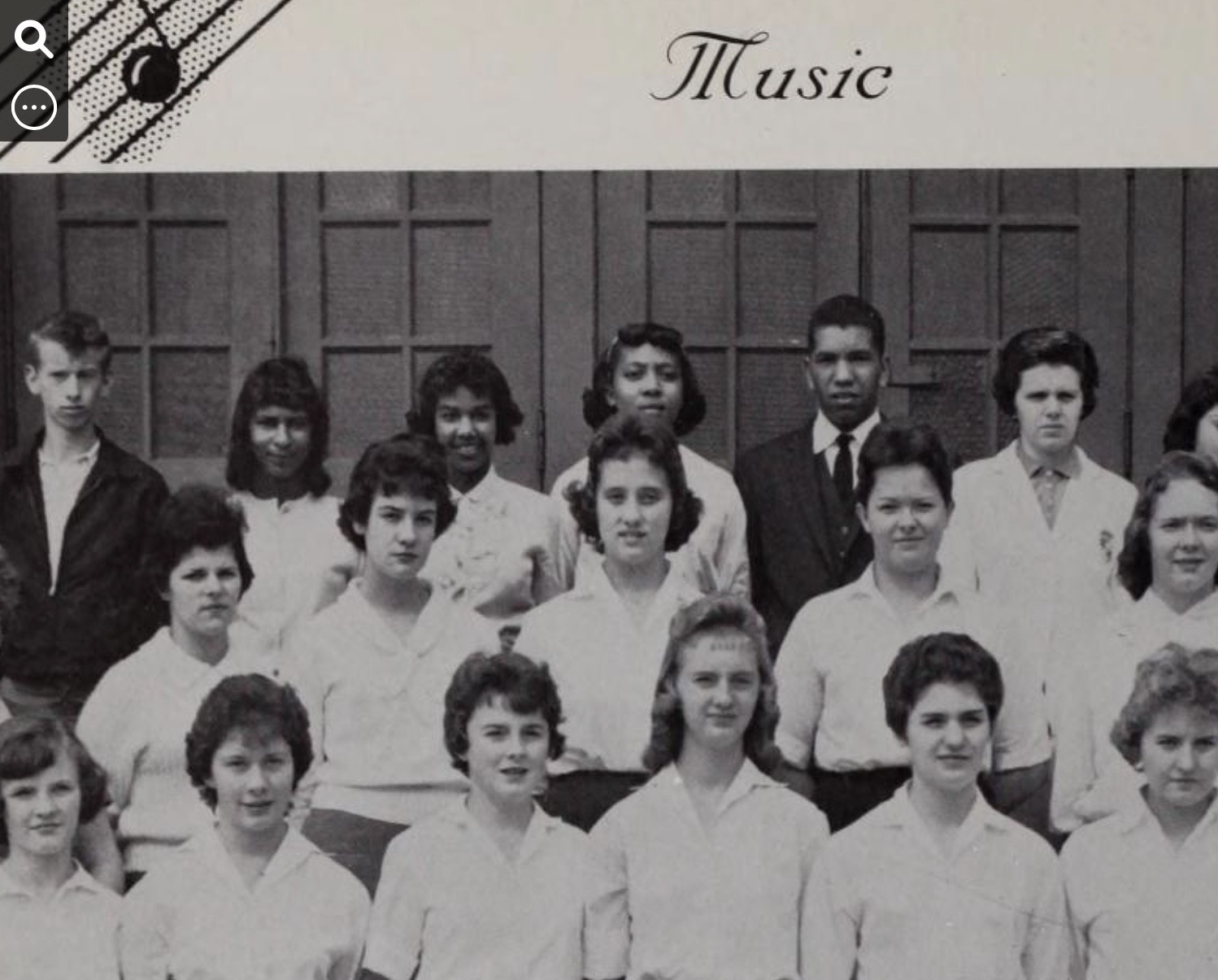
Phyllis Layne was one of the cheerleaders.
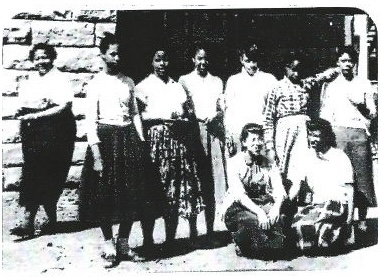
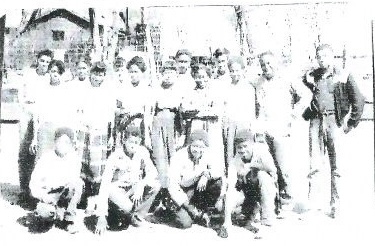
Perry A. Cline School
1937 - 1956
By:
Ann Epperson Carty
October 2019
In the early days of our country, our county of Pike in Kentucky, was primarily a trail for those going west. Later those who brought families and settled here were more concerned with providing the basics for survival rather than extras like “book learning.” Those in the state capital also seemed to be content with a mostly uneducated population. Then about 150 years ago our law makers began to think in terms of a system of common (public) schools for all the states youngsters, black as well as white.
The first common school for blacks in Pike County, Kentucky, was the colored (1) School District “A” which was established in 1875 after the 1874 Kentucky legislature mandated that there would be a system of “colored schools throughout the state”(2) In the University of Pikeville’s Mark F. Sohn’s book, Education in Appalachian’s Central Highland, he quotes from Herbert Woodson Crick 1930 master’s thesis, “History of Education in Pike County Kentucky,” that only one “colored school” was located in Pikeville prior to 1930;(3) however, later research shows that there was a black teacher employed in Pikeville in 1890,(4) so there must have been a school. It would seem that since many blacks were learning to read and write after the Civil War(5) there must have been others. It is likely that there were short-lived one-room schools and church schools in Pikeville and in the county. For example, John Jefferson Owens, better known as “Dobbin”, said that he attended a one-room school on what is now known as Redale Road.(6) Sohn’s book records that a school existed at that location for a brief time in 1908-09,(7) however, since Owen, according to his son Carroll, was born in 1911,(8) these must have been two separate schools. Dobbin also said that during the time when there was no designated school building, black children attended wherever they could be taught, primarily at churches.
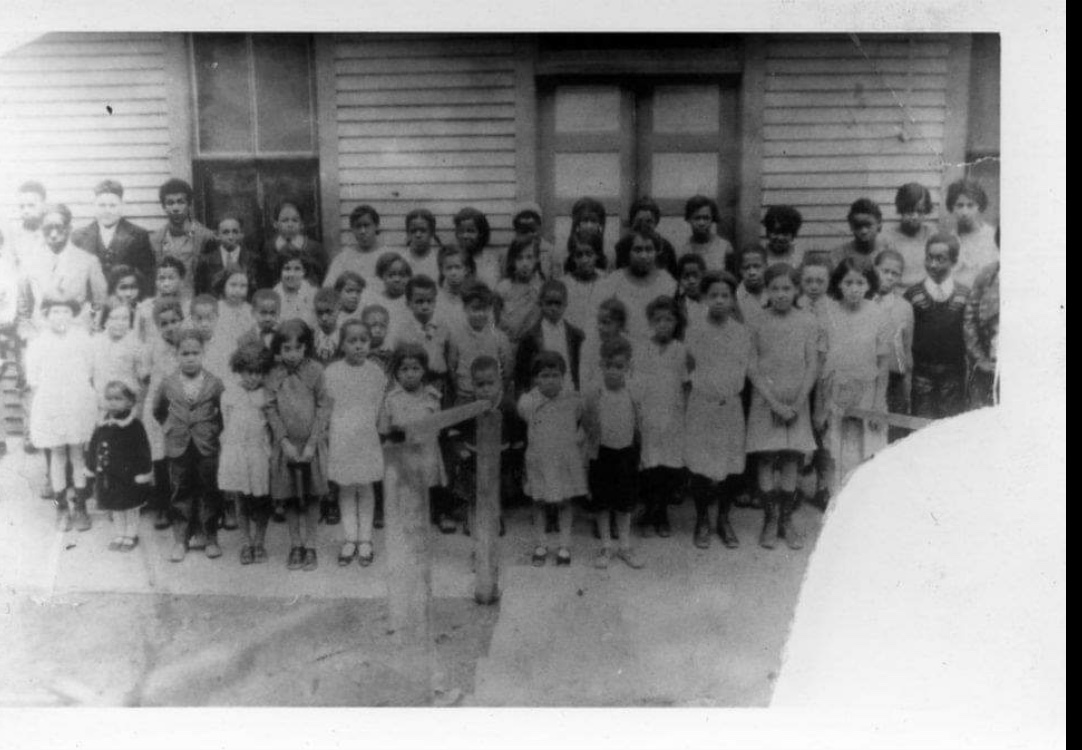
We do have a record f a family of blacks that were educated at a level unusual for their time. Effie Waller (Smith, after her marriage in 1909),(9) a prominent black poet, was born and reared in Pike County, Kentucky, where she received her early education. She later taught in schools in the city and in the county. Stafford Layne, a local black, said that Waller taught at the Northside High School which preceded the Perry A. Cline School;(10) and we have a picture of her standing with her pupils in 1897 in front of a log school known as Colored School “B” located at Biggs Branch.(11) The children of former slaves, Waller and her two siblings, were educated to a degree almost unknown in black families at the end of the eighteenth century. All three attended Kentucky State Normal School for Colored Persons in Frankfort, Kentucky(12) and all were teachers. Effie Waller Smith authored three books and saw her poems appear in the well-known literary magazines of the day.
Before the 1920’s the schools for blacks were run by the county under the supervision of a black board of directors.
These were a Mr. Greer, a Mr. Stone, and Jim Justice. They directed the schools on a trial basis and apparently failed because the education of the blacks was turned over to the city. The city of Pikeville took responsibility for educating the blacks in the 1920’s,(13) again refuting the idea that Pikeville had only one school, for blacks, before 1930.
The first significant building for blacks for which we have a record is the afore mentioned Northside High School.
According to Stafford Layne the site for this structure and the school building which replaced it, was given to Jim Justice, Layne’s grandfather, by his friend Perry A. Cline.(14) More about this later. This school, never certified, was first occupied in 1929 with forty-five students in grades one through ten.(15) At the same time there was, “a black school in the Mount Zion Baptist Church on North Hellier Street which Walta Mae Duncan attended. This school had two teachers,(16) but the two teachers mentioned in Crick’s research(17) may have been employed at Northside. Northside burned in 1932. Harriet Owens, Dobbin’s wife, said that, due to a climate of racism, arson was suspected.(18)
During the 1934-37 period children could attend classes at various churches: The Holiness Church at Turn Table Hollow, grades K through 2; the Holiness Church on College Street, grades 4 through 6; Mount Zion Baptist Church, grades 7 through 10.(19) If they were determined, the older children could make the all-day trip that entailed a walk of ten to twelve miles through a creek bed to the Liberty School(20) in Williamson, West Virginia.
The school built to replace Northside was named for Perry A. Cline, a Pikeville attorney, who was a life-long advocate for education. We have his life story from his grand-daughter, Martha Ridenour.(21) Orphaned by age 7, he was given to the care of two black men and one black woman. As he grew, he decided that he wanted to study and become a lawyer, but the woman who cared for him, evidently thinking the schools in the area of the Tug River where he lived were inadequate, brought him to Pikeville where a prominent business man, Colonel Dils, became his mentor.
Through the years, Cline studied, married, fathered eight children, passed the bar, and was eventually elected a state senator from Eastern Kentucky. Because this area had few educational opportunities for blacks, he made it his mission to write and push through a bill to improve educational opportunities for them.(22)
As already mentioned, according to Stafford Layne, Northside and later Perry A. Cline were built on land given to Layne’s grandfather Jim Justice by his friend, Perry A. Cline. Another possibility is recorded in Sohn’s book, “according to Mrs. Perry A. Cline Il, Mr. Cline sold the land to the school, but the original idea for the school was Mr. Cline’s.” (23) This mystery could probably be solved by a trip to the courthouse, if the transactions were recorded which is likely since Mr. Cline was an attorney.
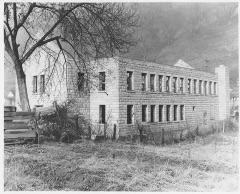
Whether the school was named for Cline because his ancestor donated the land or because he sold the land for the school or because he influenced the funding of the construction is not known; what is known for certain is that he was an avid supporter for the much-needed facility which served the educational needs of black students from its opening in 1937 until the Pikeville public schools were desegregated.
Perry A. Cline’s first principal was W. R. Cummings “1937 – 1945”, followed by E. M. Kelly “1945 – 1950”, and Cecil Reed, Jr. “1950 – 1955” (24) Walta Mae Duncan has been reported as serving as its final principal, however, she said that she was not, but when a signature was needed, she would sign as “head teacher”. (25)
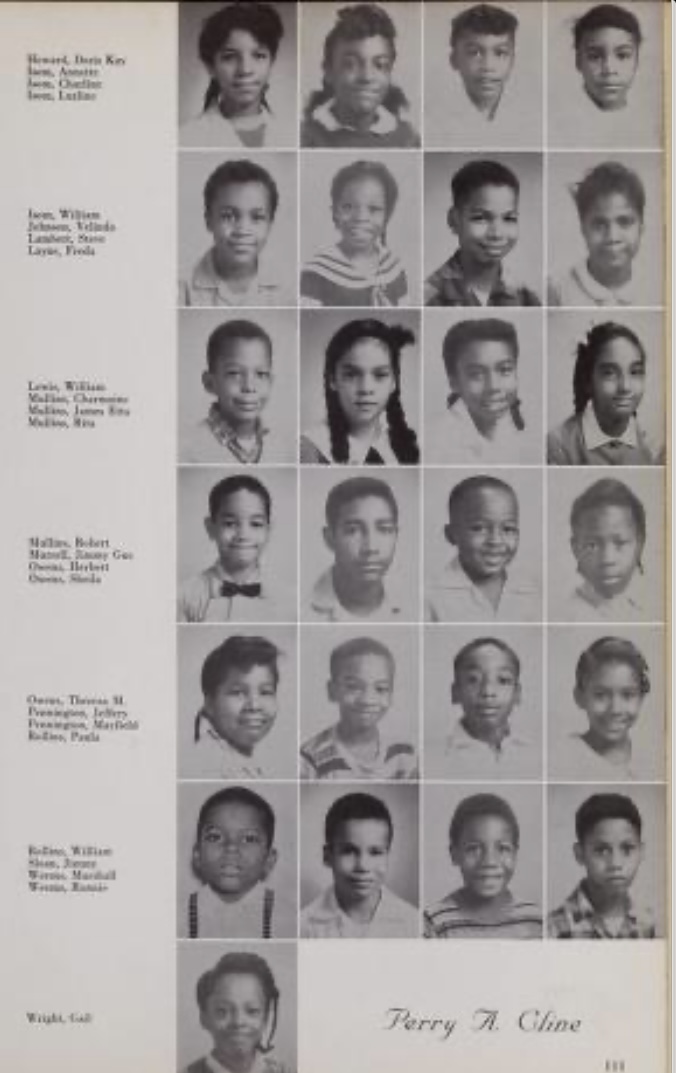
Layne says that the athletic teams were the Cline Tigers, that their colors were blue and white, and that the “first and only” yearbook was produced in 1949. (26) Does anyone have that one-and-only copy?
An article by Principal W. E. Cummings which appeared in the journal of the Kentucky Negro Education Association in 1938 gives a first-hand account of the early years of the school.
“Through the splendid cooperation of the Pikeville City Board of Education, headed by Superintendent T. W. Oliver, newly elected president of the K. E. A. and the Works Progress Administration, the present $75,000 building was built to take care of the increasing needs of this section.
“Our school now offers a regular accredited four-year high school course. Along with the regular academic curriculum, full-time courses in industrial arts are offered, not only for students regularly enrolled, but also for those who unfortunately have been forced to seek employment before the completion of the regular four-year term. A pre-school nursery has also been established. For the parents who wish to further their learning, a night school is being taught. Extra, curricula activities consist of athletics, school clubs, regular vesper services each Sunday afternoon, a P.T.A. that, incidentally, entertains the Kentucky Congress of Negro Parents and Teachers next April.
“The present school year looks promising. In all departments, one hundred and seventy-six are enrolled. The faculty now consist of six teachers with a special dietician for preschool children.
“Perry A. Cline High School, serving the educational needs of Pike County, is doing all it can to those entrusted to its care, their rightful chance to live efficiently.” (27)
Some of the faculty members Stafford Layne remembers are: Principal Kelly’s wife, Lee Shore, Unis and Lois Wilson, Helen Owens, Huett Mullins, and of course, Walta Mae Duncan. (28)
Miss Duncan who moved from Wheelwright to Pikeville in 1934, went to the school at Mount Zion Baptist Church, graduated from Perry A. Cline in 1938, and attended Kentucky State Normal School (also called a teacher’s college) which is now Kentucky State University at Frankfort. In 1943 she came back to Perry A. Cline to teach grades 4 through 6. Layne and others report that Miss Duncan and her students helped Perry A. Cline win an award from the United States Department of Defense for gathering hemp as part of the war effort.(29) When the black children went to Pikeville Elementary she went with them and taught first grade until her retirement.(30) Miss Duncan was named Teacher of the Year at Pikeville Elementary School in 1967.(31)
Perry A. Cline School received the honor of being named “The States Most Progressive School” in 1944, by the Kentucky Negro Educational Association. (32)
Although our state constitution contained the following clause: “In distributing the school fund, no distinction shall be made on account of race or color. Separate schools for white and colored children shall be maintained.”(33) One would be naive to argue that this provision was ever followed. There was understandable resentment at the obvious unfairness of the difference in the facilities and the materials available for the children. Miss Duncan spoke of the gratitude of Perry A. Cline teachers when Lorraine Billiter, a teacher at Pikeville Elementary School, would come with instructional material to share.(34)
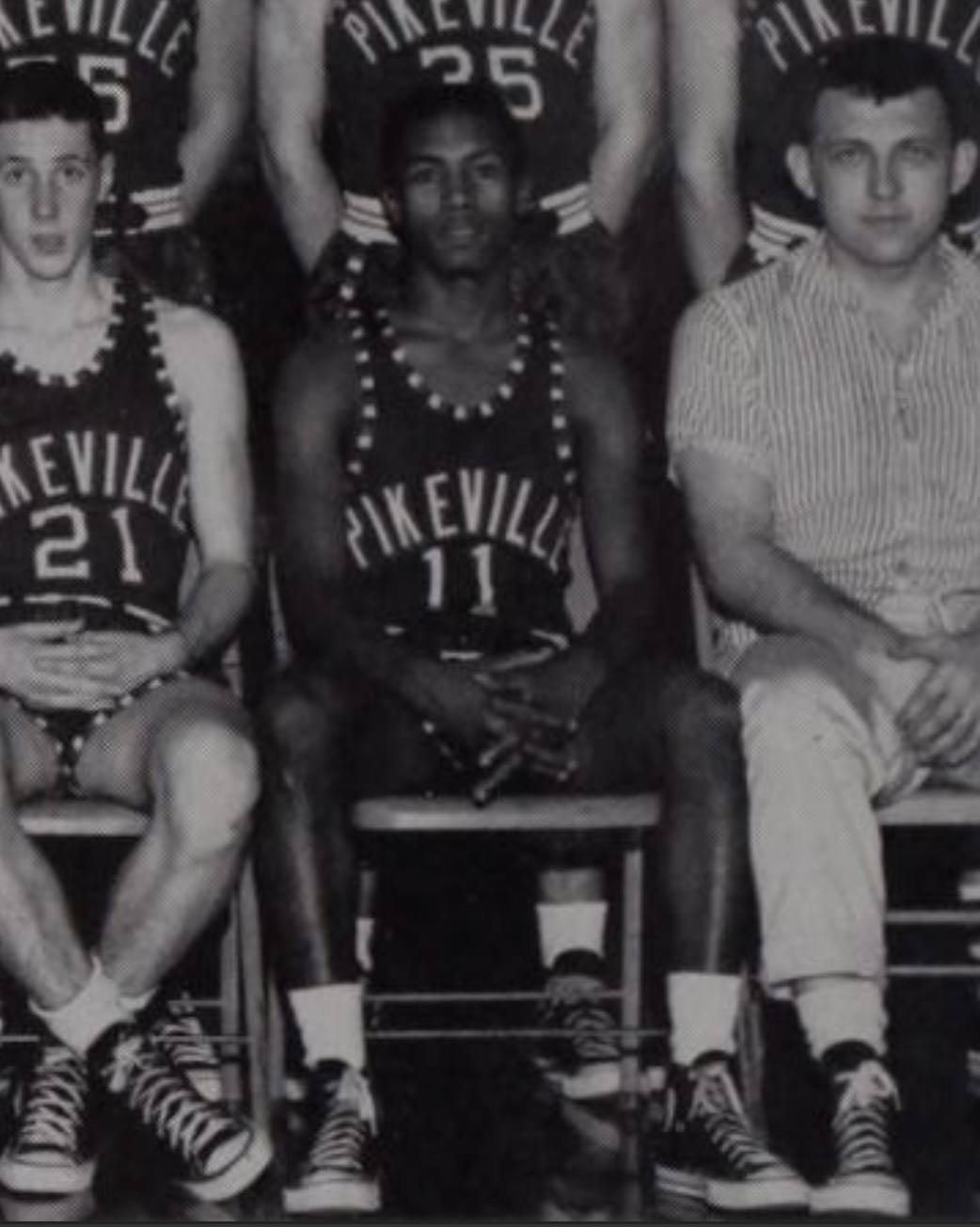
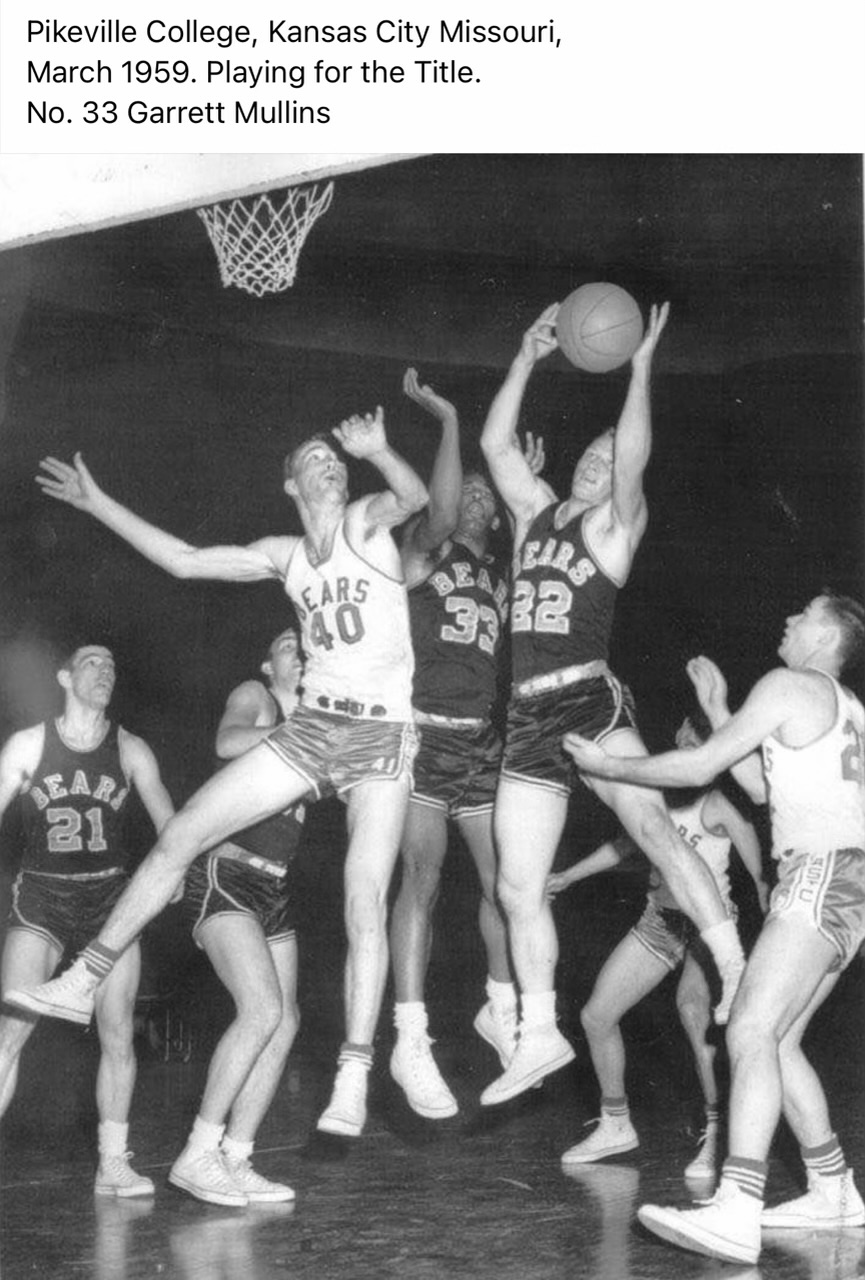
Ralph Wilson, an outstanding athlete who was born and reared in Pikeville, attended Perry A. Cline School in the 1940’s. He said the school had no facilities or equipment for recreation so the students played games that didn’t require equipment-tag, ring around the rosie, kick the can, marbles, and jump rope.(35) He added that this situation had not changed when the school closed. In spite of the lack of recreation facilities at Perry A. Cline, Wilson had a stellar career. He was the first black to be awarded an athletic scholarship to Marquette University and years later returned to Pikeville to coach basketball at Pikeville High School. (36)
When invited to speak at the Black History Month celebration on June 3, 2007, he spoke frankly of his and his friend’s resentment when they had to study from “hand-me-down” books and “wait until the other schools had finished basketball practice before they could play.”(37)
Following World War II, public supported black schools began to receive attention. In spite of the Supreme Court’s separate but equal ruling, schools were separate, but not equal. Gradually, old laws began to be enforced and new laws passed. On May 17, 1954, a Supreme Court decision, in the case of Brown vs. Board of Education, declared segregation of children in public schools unconstitutional in the United States. (38)
The machine of the federal government began the process of implementing this epic ruling. Some areas of our nation complied willingly but others, especially in the south, were bitter, stubborn, and in some states unrelenting. When pressure from Washington became intense, governors from some state began to defy federal laws and armed forces would be called out to quell demonstrations, and in some instances, to escort children to school. Televisions became the supporters-of-desegregations friend. Many Americans were appalled to observe water hose and dogs being turned against fellow citizens. Images of little girls bravely walking between jeering adults served only to strengthen public attention against those who opposed allowing them to attend school.
Prior to 1964, no definite date on the implementation of Brown vs. Board of Education’s decision was recorded. Some who have studied this period say that “fewer then 1 percent of all black children in 11 southern states” attended desegregated schools.(39)
In Pikeville where the city schools were becoming woefully crowded, decisions had to be made. The elementary classes were moved throughout the campus: first, second, and third grades remained in the elementary building, the fourth through sixth grades were moved to Wright Hall (A former dormitory for girls from the county who came into town to attend Pikeville High School), and the fifth grade met in the basement of the high school, (40) Later the board leased the old Collegiate Institute from the college for additional classroom space.(41) When what is now known as the Pikeville Independent School system lost its long-held accreditation from the Southern Association of Schools and Colleges because of the crowding, the administration realized if it were to continue providing the quality educational experience Pikeville citizens wanted, a new facility must be built. A bond issue was passed, land on Chloe Road acquired, and construction of a new elementary building was begun(42) and, too, were the plans for the end of segregation.
In the summer of 1955, the Pikeville school board announced the appointment of a citizens lay committee “which would make recommendations as to the procedure to be followed in complying with a directive from the Kentucky State Board of Education that all Kentucky schools should be integrated as soon as feasible.”(43)
When rumors began to circulate about certain aspects of the report, the committee announced through the newspaper that it would avoid making any recommendation that would discriminate against any particular area. They then stated flatly that they recommended ending segregation at the school and faculty level.(44) In March of 1955 the city board decreed that the Perry A. Cline high school students would enroll in Pikeville High School in the fall of 1956. The first through eighth grade students were enrolled gradually with the majority of grades one through three being the last to leave Perry A. Cline school. When the new elementary school on Chloe Road opened, school desegregation in Pikeville was complete.
According to Ruth Ann Mullins and Stafford Layne the last students to graduate from the Perry A. Cline School in the spring of 1956 were Alfredia Mullins, Lonnie Mullins, and Herman Honaker.(45)
A probably incorrect list of the pupils who integrated the Pikeville Independent School System in the fall of 1956 were Frances Layne, Cicily Yvonne Owens, Becky Honaker, Richard Honaker, Phyllis Hunt, Stafford Layne, Lorraine Mullins, Carl Owens, and Richard Weems.(46)
Fortunately, unlike many school systems the process of desegregation at Pikeville was without any serious incident.
“Two Negroes appeared briefly with the football team in a contest against Elkhorn City, on Labor Day. There was no reaction.”(47) Walta Mae Duncan said that there were very few racial problems because the issue was kept so quiet in Pikeville. “Reporters, deferring to the judgement of school officials who thought a lot of limelight would hinder integration, would not go all out with this story.”(48)
The integration report of the Pikeville school board to the United States Office of Education states that the system had been given permission to delay the transfer of the elementary and junior high department until the completion of the building on Chloe Road.(49) This transition was made in the fall of 1967. Upon complete integration, ninety students and one teacher had transferred form the Perry A. Cline School and the old building was closed.(50) “Although still representing the segregated education during most of the history until 1956, the Perry Cline School represented a huge step forward for the black youth in this part of Kentucky”. (51)
The old stone building did not remain long empty. In 1966
the place that had sheltered children since 1937, was reopened by the Pikeville Housing Authority as a senior center and community center. In 1992 it became a shelter for the homeless which has been managed by WestCare Kentucky since 2006.(52)
On June 3, 2007, as part of the celebration of Black History Month, the Perry A. Cline School building was named a Kentucky Landmark for its service to the black community. (53)
Thus, Perry A. Cline’s dream and the place of learning and inspiration for hundreds of children, continues to be a conduit for service.
Cited work click here